Find your practice
From gentle Hatha to energizing Power — in the studio or online, there's a class for every body.
Slow, grounded postures held with attention. Best for beginners and anyone easing back into practice.
60 minutes. Poses are held at a deliberate pace, giving you time to settle into alignment and breath before moving to the next. No previous experience needed — modifications are offered throughout.
An ancient Chinese practice of gentle movement and mindful meditation designed to cultivate the body's vital energy, or Qi. Qigong enhances the flow of energy through the body, promoting vitality, balance, and overall well-being.
60 minutes. Continuous, flowing movement paired with breath, drawing on principles distinct from seated yoga practice. A gentler entry point into movement-based energy work.
Deep, passive stretches that work the connective tissue. Meditative and slow by design.
60 minutes. Poses are held far longer than in a typical flow class, targeting the deeper connective tissue rather than the muscles. Best suited to those wanting a slower, more internal practice.
A fast-paced, dynamic flow — the opposite pace of Hatha. Postures link continuously to the breath rather than being held individually, closer in feel to a cardio workout than a slow, meditative practice.
60 minutes. Best for students already comfortable with basic poses who want to build strength, stamina, and heat.
Playful, story-driven movement — poses introduced through games, animal names, and simple breathing exercises rather than formal instruction.
60 minutes. Designed for children roughly 5–10 years old. Builds focus, coordination, and emotional regulation in a lighthearted, non-competitive setting.
A guided, seated practice — no prior experience or ability to "clear your mind" required. Expect gentle prompts around breath awareness, body scanning, or simple visualization.
[TODO: confirm actual session length — not yet on the fixed weekly schedule, may run as a standalone or workshop session.]
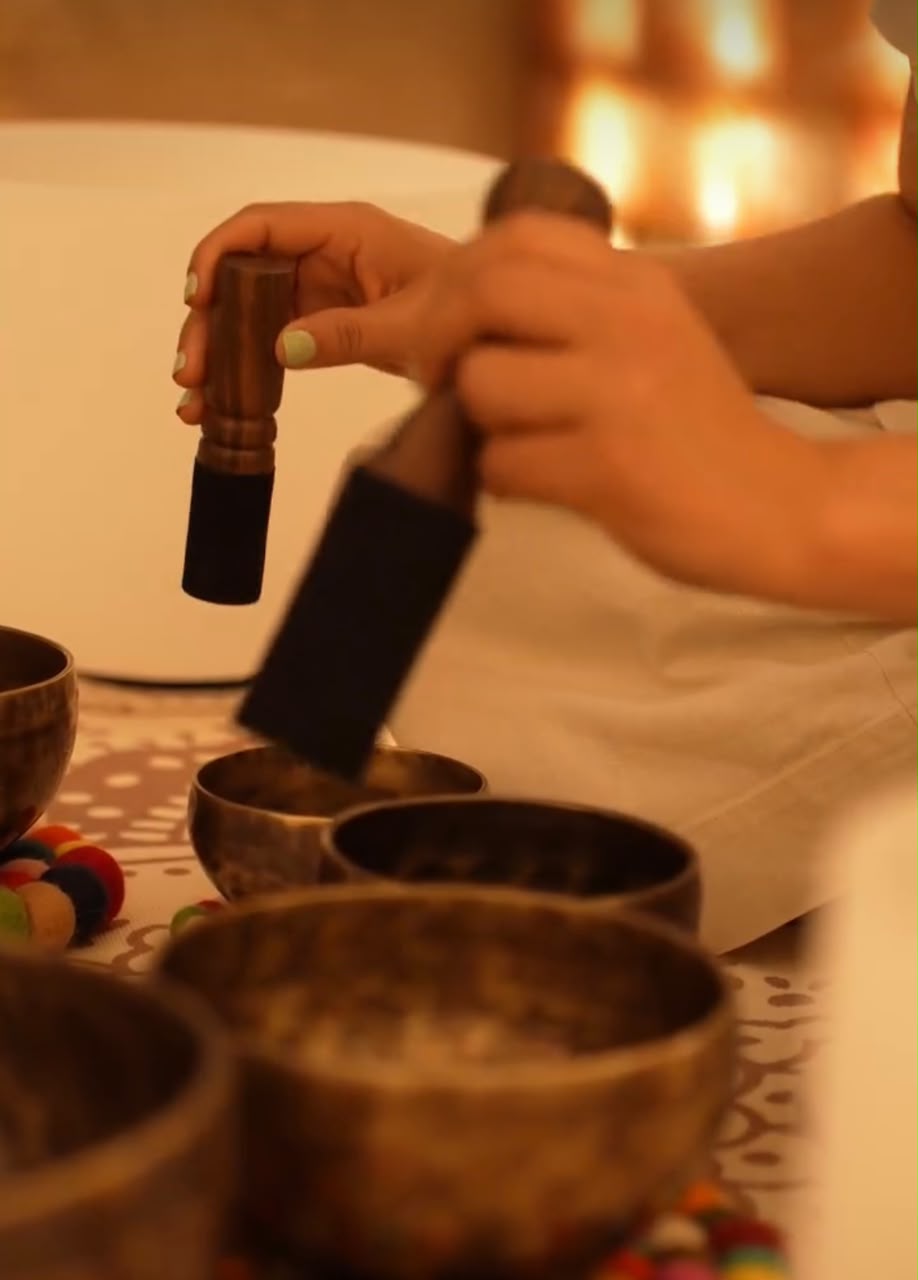
A fully passive, lie-down experience using instruments like Tibetan singing bowls, gongs, and chimes. There's nothing to do but rest and listen — no meditation technique or breathing pattern required.
[TODO: confirm actual session length and instruments used — not yet on the fixed weekly schedule.]
Focused breathing techniques — such as alternate nostril breathing — used to calm the nervous system and prepare the mind for meditation. Seated and low-impact, suitable for most fitness levels.
[TODO: confirm actual session length — not yet on the fixed weekly schedule.]
 Vyoma Yoga